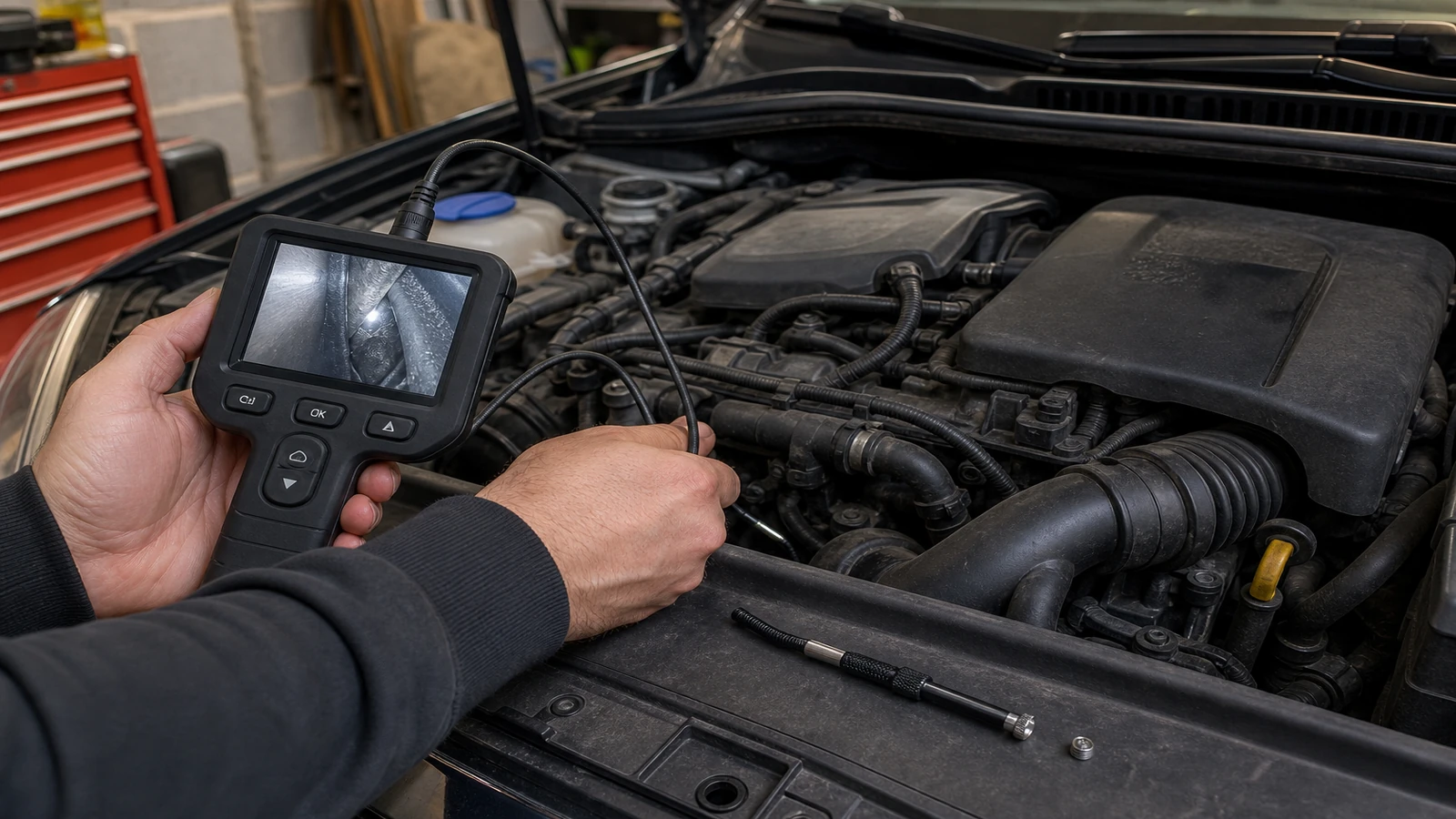
Short answer: A borescope can help locate a dropped nut in an engine bay when direct sight is blocked, but the camera should be used for viewing rather than moving the object. The Hayve listing states a 7.9 mm lens figure, adjustable LEDs, a semi-rigid 5-metre cable and a built-in screen, but it does not give the complete camera-head diameter or list a retrieval attachment. Secure the vehicle, prevent the engine or fans from starting and let hot parts cool first. If the nut is near belts, electrical systems or an inaccessible cavity, use the vehicle procedure or a competent technician.
Key takeaways
- Map a clear viewing route before putting the lens into the engine bay.
- Keep the borescope cable separate from any attempt to move or lift the dropped item.
- Stop when the object lies near moving, hot, high-voltage or inaccessible components.
Narrow the likely location before using the camera
Think about where the nut fell, the angle of nearby surfaces and any ledges below the drop point. A torch and direct sight may resolve the problem without introducing another object into the bay. Use the camera only after identifying a route that avoids sharp edges and components that could trap the cable.
The 7.9 mm lens figure is not a documented outer head diameter. Confirm the complete camera-head dimension and check the route as far as possible rather than assuming the camera will pass a visible gap.
- Mark the original drop point and inspect all directly visible surfaces.
- Secure the vehicle and prevent unintended engine or fan operation.
- Choose a cool, dry route clear of belts, pulleys and electrical components.
- Compare the narrowest gap with the confirmed complete camera-head diameter.
- Advance the cable slowly, adjust the LEDs and stop at resistance.
Use light and cable shape to confirm position
Begin with modest LED brightness and increase it only if the target remains dark. Reflective metal can create glare, while deep shadow can make distance difficult to judge. Change the lens angle by withdrawing and reshaping the semi-rigid cable rather than levering it against components.
Once the item is visible, note its relationship to fixed landmarks. The screen view may not show depth accurately enough to plan removal by itself, so confirm the location from another angle if that can be done safely.
| Observation | What it may help establish | What it does not establish |
|---|---|---|
| Nut visible beside a fixed bracket | Approximate location | A safe removal method |
| Bright reflection | Possible metal surface | Object identity or distance |
| Cable stops before the target | Route is obstructed | Permission to push harder |
Separate locating from removal
Withdraw the camera before using a separate, task-appropriate method to move the nut. The current listing text does not name a hook, magnet or other retrieval attachment, and it does not document lifting capacity or safe pulling force. Confirm any pictured accessory from the seller or manual; do not treat the camera head or cable as a recovery tool.
If removal requires reaching near moving parts, high-voltage components or dismantling outside your competence, leave the object in place until the correct workshop procedure is available.
Limits and checks before an engine-bay search
The current listing does not specify the complete camera-head diameter, temperature resistance, chemical resistance, minimum bend radius, focus range or compatibility with individual vehicle layouts. These gaps matter in a crowded engine bay.
Use the product only for a controlled live view in a stationary, cool and safely isolated area. HSE vehicle-repair guidance remains the boundary for managing movement and engine hazards.
Related guides and product details
Choose the Hayve camera for location only after confirming its complete head diameter and cable route for a safely prepared engine bay. Read Engine Inspection Camera UK: What to Compare Before Buying for related guidance. Read Hayve Industrial Inspection Endoscope Camera Buying Brief for related guidance. Review the documented specification on the Endoscope inspection camera 5m, 4.3" ips screen industrial product page before ordering.
Sources and safety context
- Supports the listed lens, cable, LEDs and built-in screen. Current Hayve product page.
- Supports precautions around vehicle movement, engines and workshop hazards. Health and safety in motor vehicle repair and associated industries.